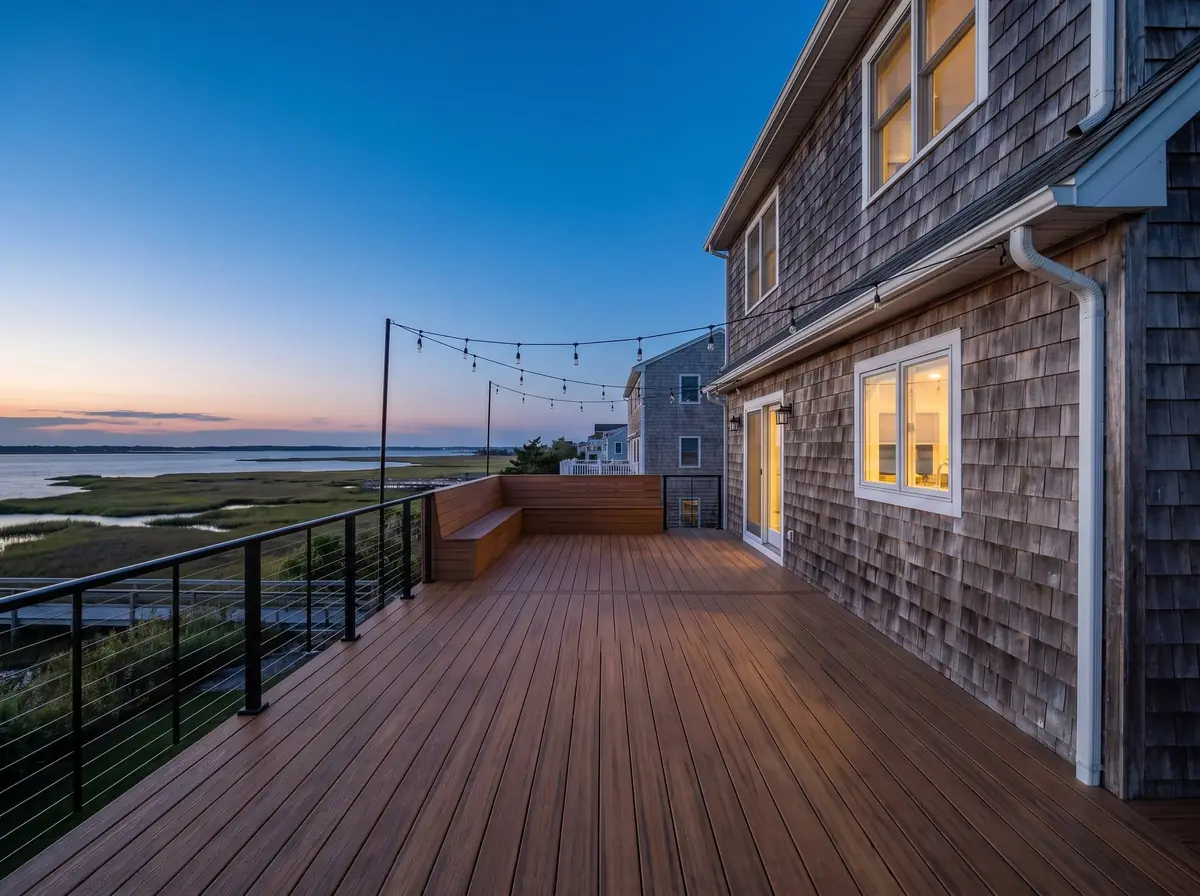
Outdoor living, built to survive the Shore
Paragon serves Ocean, Monmouth, Middlesex & Burlington Counties and the Jersey Shore, NJ. Every build includes engineered framing on frost-depth footings, township permits and inspections handled for you, and railing and lighting options priced line by line in a free itemized estimate. Paragon Exteriors is registered as a New Jersey home-improvement contractor (NJ HIC #13VH13814500). Ask for the current insurance certificate and any trade-license attribution required for the proposed scope. Related links: financing information.
A deck near saltwater lives a harder life than one in central Jersey — more UV, more moisture, more corrosion, more wind. We spec for that from the first footing, not as an afterthought.
Composite vs. wood: the real trade-off
The decking question is really a maintenance question. Here’s how the three materials we install most actually compare:
| Decking | Typical installed cost* | Upkeep | 15-year outlook |
|---|---|---|---|
| Pressure-treated pine | $8,000 – $14,000 | Wash + stain/seal every 2–3 years | Lowest entry price; expect checking, splinters, and board swaps sooner near the water |
| Composite (Trex, TimberTech) | $14,000 – $24,000 | Soap-and-water wash | Never needs stain; color and grain shrug off salt air and barefoot Julys |
| PVC / premium composite | $20,000 – $30,000 | Soap-and-water wash | Best moisture and fade resistance available — the pick for bayfront and poolside decks |
*Ranges for a typical 250–350 sq ft deck with stairs and railing. Size, height off grade, and rail choice move the number — the full breakdown is in our NJ deck cost guide.
Wood wins the day you pay for it. Composite usually wins by year eight, once you price a decade of stain, supplies, and lost Saturdays against the upfront gap. We quote both without a sales pitch — it’s your math to run.
The frame is the deck
Decking boards are the part you see; the structure underneath is the part that holds your family, your grill, and thirty guests at a graduation party. Every Paragon deck is framed the same way regardless of what goes on top:
- Footings below New Jersey’s 36-inch frost line, inspected by the township before a drop of concrete is poured
- Ledger bolted and flashed correctly — a rotted ledger connection is behind most deck failures you read about, and it’s pure shortcut damage
- Beams and joists sized to span tables, not eyeballed
- Joist tape over every framing member so the structure outlasts the boards two-to-one
- Hot-dipped galvanized or stainless hardware — salt air eats standard zinc connectors from the inside out
- Hidden fasteners on composite for a clean, screw-free walking surface
- Ground clearance and airflow on low decks, because trapped moisture is how framing dies young
Permits, inspections, and code — our problem, not yours
Every deck we build is permitted through your township under New Jersey’s construction code, and we handle the whole cycle: drawings, application, the footing inspection, and the final. The code details matter more than most homeowners realize — decks more than 30 inches off grade need 36-inch guardrails, baluster gaps must reject a 4-inch sphere, and stairs need graspable handrails and illumination. Skipped permits surface at the worst time: when you sell the house and the buyer’s inspector asks for paperwork that doesn’t exist.
Railings and lighting turn a platform into a room
Railing is roughly a third of what you see from the yard, so it deserves a real decision — slim aluminum balusters or cable rail that won’t block a water view, a flat drink rail for bay-breeze evenings, or classic sleeved posts to match the house. Low-voltage lighting is the cheapest upgrade with the biggest payoff: stair riser lights and post caps on a dusk timer make the deck usable long after sunset and safer every night.
While we’re building, it’s the natural moment to upgrade the way you get out there — a new sliding or French patio door folds into the same project, and if new siding is on your list, sequencing them together lets us tie the ledger flashing and wall detail together properly.
Start in the off-season, use it all summer
Permit review takes weeks and spring schedules fill fast — the homeowners grilling on new decks in May signed in the fall or winter. Current third-party financing options may be available, subject to lender disclosures, terms, and approval. Paragon is not a lender and does not guarantee approval or a particular payment. Related links: Request your free itemized estimate and financing information.
Project planning guide
Answers for planning your project
How much does deck repair cost?
Angi's May 2026 data reports an average near $2,243, but repairs range from a few boards or a railing correction to major structural work. Size, access, height, material matching, ledger condition, stairs, posts, beams, joists, hardware, and permit requirements determine whether repair or deck replacement is better value.
Deck cleaning, refinishing, painting, and wood staining
Maintenance starts with identifying the material and coating already present. Wood decks may need gentle cleaning, drying, sanding, targeted repairs, and a compatible penetrating stain or coating. Composite boards use manufacturer-approved cleaners and generally should not be sanded or stained. Peeling paint, soft boards, loose guards, or corroded connectors need correction before a cosmetic finish hides them.
Wood deck construction and deck design
Pressure-treated wood remains a useful lower-upfront-cost option when the owner accepts recurring maintenance. Design should resolve use, circulation, stairs, doors, grade, footings, structure, railings, privacy, lighting, and drainage before board color. For a long-life low-maintenance surface, see composite deck design; for patios, porches, pergolas, enclosures, and fencing, visit outdoor living construction.
Services available for this type of project
- Deck cleaning
- Deck construction
- Deck design
- Deck installation
- Deck painting
- Deck railing repair
- Deck refinishing
- Deck repair
- Wood deck construction
- Wood staining
A project may combine several of these services. We inspect the property, confirm priorities, and define the work in a written proposal before construction begins.