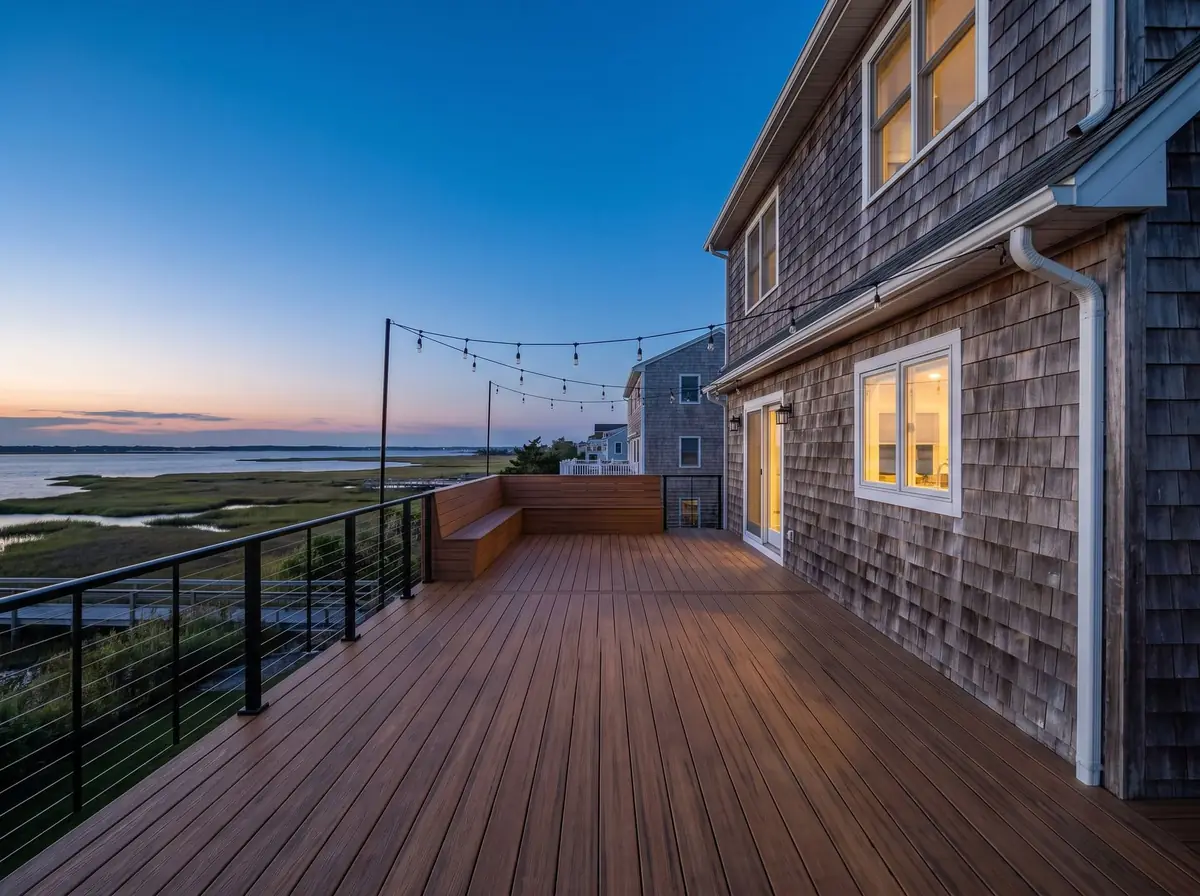
Deck replacement is the right move when rot, movement, failed footings, undersized framing, or obsolete railings make a cosmetic resurfacing unsafe or poor value.
How much does it cost to replace a deck?
A deck replacement cannot be priced from surface square footage alone because demolition, disposal, footings, framing, stairs, height, access, railings, and finish material all matter. Paragon's broader NJ planning guide places many complete deck projects around $8,000 to $30,000. A structural rebuild with composite boards and upgraded railings can exceed that range.
Angi's 2026 data reports an $8,000 national average for deck replacement and $30 to $60 per square foot for many new builds. Use those figures for orientation, then require a site-specific scope that separates demolition, framing, decking, railings, stairs, permits, and electrical or lighting options.
Should I resurface or replace my deck?
Resurfacing makes sense only when the footings, posts, beams, joists, ledger, connections, and stair structure are sound and compatible with the new surface. In that case, old boards and railings can be removed while the inspected frame remains. A full replacement is safer when structural members are soft, split, undersized, poorly connected, or repeatedly patched.
Do not judge the frame from the top alone. The ledger at the house, flashing, beam bearings, post bases, joist ends, and fasteners often show deterioration before the visible boards do. Paragon documents those conditions before recommending deck remodeling or replacement.
Do you need a permit to replace a deck in NJ?
Most structural deck replacements in New Jersey require construction permits and inspections; zoning review may also control setbacks, coverage, location, and height. Replacing only limited surface boards can be treated differently from rebuilding framing, footings, stairs, or guards.
The exact permit path is municipal and scope-specific. Confirm it with the local construction and zoning offices before demolition. A written contractor scope should identify who prepares drawings, files applications, schedules inspections, and closes the permit.
Can you put composite decking on an old frame?
Sometimes, after the existing frame passes a hands-on assessment. Joist spacing must match the chosen manufacturer's requirements, the structure must be flat and appropriately sloped where needed, and every connection must be sound. Composite boards can outlast a marginal wood frame, so covering weak framing wastes the material investment.
If the frame is suitable, resurfacing can reduce demolition and preserve usable structure. If it is not, a full rebuild lets the framing, flashing, hardware, and rail system match the service life expected from a new composite deck.
How long does deck replacement take?
Once approvals and materials are ready, many straightforward replacements take roughly one to three working weeks. Large, elevated, multi-level, or heavily redesigned decks take longer. Permit review, utility locating, custom railings, electrical work, foundation conditions, inspections, and weather add calendar time outside the active build.
The schedule should distinguish preconstruction from field work. Ask for milestones covering design, selections, permit submission, demolition, footings and framing, inspection holds, decking and railing, final inspection, and cleanup.
Deck replacement details for coastal New Jersey
Salt air and repeated wetting punish exposed connectors and trapped end grain. Coastal deck replacement should specify compatible corrosion-resistant hardware, ledger flashing, drainage paths, post bases, and fasteners approved for the selected lumber and decking. Wind exposure also affects rail and privacy-screen design.
Paragon serves Ocean, Monmouth, Middlesex & Burlington Counties and the Jersey Shore, NJ. The project starts with a structural condition review and an itemized choice: targeted repair, resurface, or full replacement.