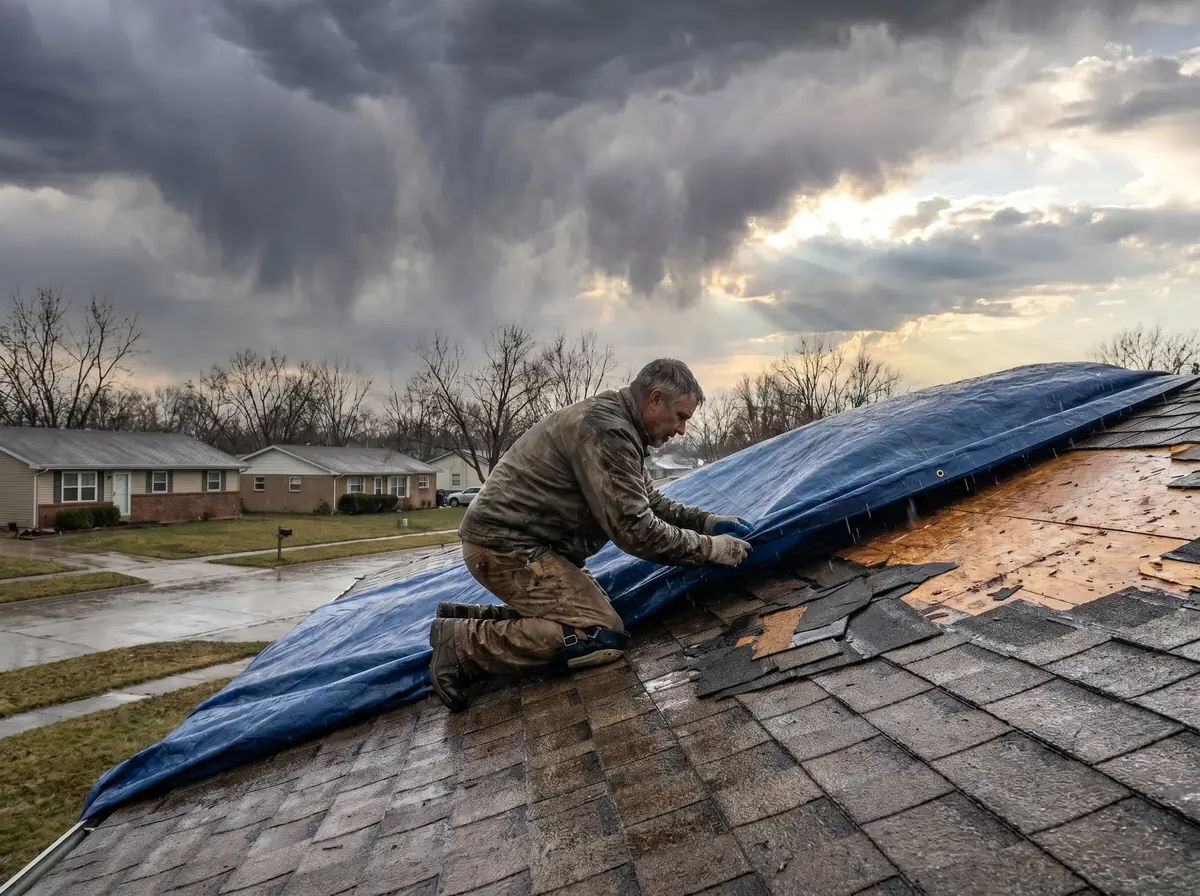
A roof leak is an emergency when water is actively entering the home, the ceiling is sagging, electrical fixtures are wet, or wind has opened the roof system.
Is a leaking roof an emergency repair?
Yes when the leak is active, spreading, near electrical wiring, or tied to missing roofing, a fallen branch, or visible structural movement. Move people away from a bulging ceiling, shut off power to an affected circuit only if you can do so safely, place a container under minor drips, and call for professional help. Do not climb onto a wet or wind-damaged roof.
A small stain that appears dry still deserves prompt diagnosis. Water often travels along rafters and insulation before it becomes visible, so the ceiling mark may not sit directly under the failed shingle, vent boot, skylight, or flashing.
What should I do first when my roof is leaking?
Protect people first, then reduce interior damage. Keep clear of sagging drywall, move valuables, photograph the affected rooms, and note when the leak started. If water is touching a light, outlet, or appliance, contact the utility or an electrician rather than handling the wet fixture. Call 911 for fire, collapse, or another immediate life-safety threat.
From inside the home, Paragon can use your photos and storm timing to prepare for the visit. Outside, a trained crew looks for displaced shingles, failed flashing, punctures, open seams, clogged drainage, and storm impact. That separates an emergency containment visit from the permanent roof leak repair.
Can a roof leak be repaired in the rain?
Permanent roofing work normally waits for a safe, dry weather window. Wet surfaces, lightning, high wind, and poor visibility make roof access unsafe and can prevent sealants or membranes from bonding correctly. When conditions allow, temporary tarping or another water-shedding measure may limit damage until the permanent repair can be completed.
Availability, roof pitch, access, and storm conditions determine what can safely happen during the first visit. The National Roofing Contractors Association advises homeowners to avoid climbing onto storm-damaged roofs and to use qualified roofing professionals.
How much does emergency roof leak repair cost?
Paragon's published planning range for many permanent roof leak repairs is about $450 to $3,500, but an emergency visit can fall outside that range. Temporary protection, after-hours access, steep or high roofs, widespread wet decking, and interior or structural damage change the scope. A small vent-boot repair and a tree puncture are not the same job.
Ask for the emergency containment work and the permanent repair to be itemized separately. That makes it clear what stops the immediate water entry, what restores the roof assembly, and which interior repairs—if any—belong in another trade's scope.
Does homeowners insurance cover an emergency roof leak?
Coverage depends on the cause, the policy, the deductible, and the insurer's decision. Sudden wind or hail damage may be covered, while wear, maintenance problems, and long-term seepage are commonly disputed or excluded. Take reasonable steps to prevent further damage, preserve receipts, and report the loss according to your policy.
Paragon can inspect and photograph observed conditions, provide an itemized roofing scope, and coordinate authorized site access. The insurer determines coverage, claim scope, and payment under the policy. Read the NJ roof insurance claim guide and speak directly with your insurer or licensed insurance adviser about your policy. Related resources: NJ roof insurance claim guide.
From temporary tarp to permanent roof repair
The first objective is to make the structure safer and reduce additional water entry. The second is diagnosis: shingles, flashing, pipe boots, skylights, low-slope transitions, and roof decking are checked for the actual failure path. The final written scope should name the damaged component, the repair method, materials, and any conditions that could change the price after the roof is opened.
For isolated damage with sound surrounding materials, a repair may be enough. When the roof has widespread age-related failure or storm damage across multiple slopes, compare the repair with roof replacement before spending repeatedly on short-lived patches.