Storm Damage
Wind & Storm Damage Roof Insurance Claims in NJ: A Step-by-Step Guide
By Paragon Exteriors LLC · Published June 22, 2026 · Roof-leak section updated August 18, 2026
Coverage note: This guide provides general information, not legal or insurance advice. Coverage, notice deadlines, deductibles, depreciation, and payments depend on the policy and insurer. Report damage promptly, read the declarations and endorsements, and confirm decisions with the carrier or a licensed insurance professional. See the New Jersey Department of Banking and Insurance storm guidance.
When insurance actually pays for your roof
When may homeowners insurance pay for roof damage?
Potentially payable situations begin with sudden damage from a covered event, subject to the actual policy. Coverage still turns on cause, timing, limits, deductibles, exclusions, and the insurer’s investigation. Age or maintenance can change the outcome, while prompt reporting and documentation help the carrier evaluate what happened.
In New Jersey, a homeowners policy may pay for roof repair or replacement when a covered event causes sudden damage, subject to the policy’s terms, limits, deductible, exclusions, roof-age provisions, and the insurer’s decision. Age, wear, maintenance, and endorsements can change coverage. Prompt reporting and clear documentation help the carrier evaluate the cause and timing.
Covered vs. not covered — the line adjusters draw
What roof damage is more likely to be covered or denied?
Claim outcomes often depend on whether damage is sudden and storm-related or reflects age and deferred maintenance. The guide places Tree or limb impact in its usually covered column, while the policy and insurer still control the decision. Dated weather records, roof-condition images, interior photos, and matched damage can help document cause and timing.
| Usually covered | Usually denied |
|---|---|
| Wind-lifted or missing shingles after a named storm | General age / end-of-life wear |
| Tree or limb impact | Long-term leaks from deferred maintenance |
| Hail bruising and granule loss from a storm | Improper prior installation |
| Wind-driven rain entering through storm damage | Ice-dam damage if excluded by endorsement |
| Sudden structural damage from a nor’easter | Cosmetic-only marks with no leak (some policies) |
Code-compliant installation and project records can support condition documentation, but the insurer determines coverage and claim outcomes under the policy. An out-of-area adjuster who sees a 20-year-old roof will lean toward “wear.”
The 5-step NJ claim, in order
What should a homeowner document before roof claim work?
Early documentation preserves the roof condition, interior effects, debris, and weather context before repairs alter the evidence. The guide points to NWS advisories for Ocean and Monmouth County as public records that can support the reported loss date. Temporary protection and receipts can then be documented under the carrier’s instructions and policy terms.
1. Document before you touch anything. Photograph the roof, the yard debris, interior water stains, and any date-stamped weather. Note the storm date — NWS advisories for Ocean and Monmouth County are public record and pin your “date of loss.”
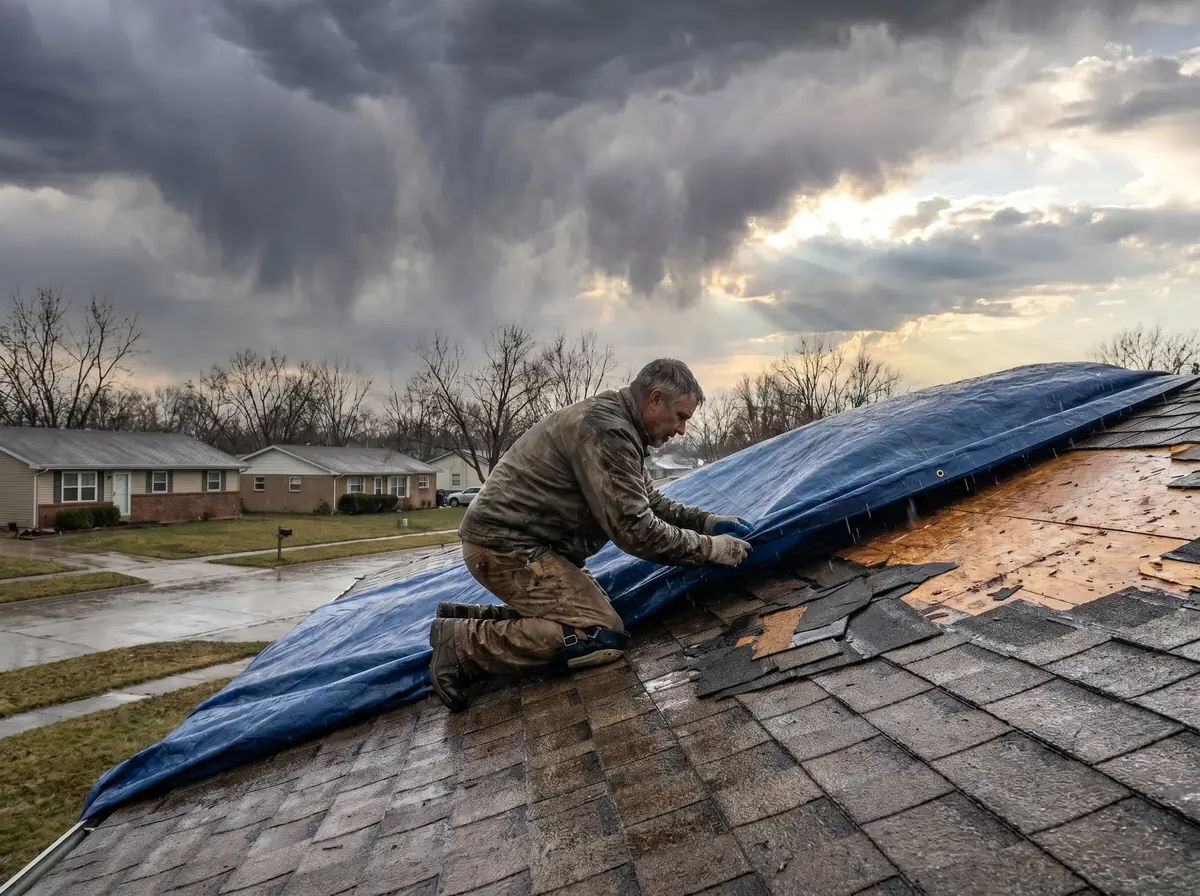
2. Take reasonable temporary steps and keep receipts. Policies commonly require the homeowner to protect the property from further damage. Ask the carrier about emergency tarping and permanent-repair timing, document the work, and keep receipts; reimbursement depends on the policy and insurer.
3. Report promptly and get your claim number. Call the carrier or use its app. Report the date of loss and the suspected cause. Notice, proof-of-loss, repair, and suit deadlines vary by policy and carrier, so read the policy instead of relying on a universal one-year rule.
4. Coordinate authorized roof access and document observations. Ask the insurer how site access should be handled. A contractor can inspect observable conditions and provide photographs and an itemized roofing scope; the adjuster and insurer determine the covered scope and payment under the policy.
5. Review the scope before permanent work. Compare the adjuster’s line-item scope with the contractor’s. Questions about flashing, ventilation, ice & water shield, or code-related work can be raised with photos, permit requirements, and written documentation; the policy and carrier determine payment.
ACV vs. RCV: the number that changes everything
What does ACV mean in a roof insurance claim?
ACV means actual cash value in a property-insurance claim. It generally reflects depreciation, while the policy, endorsements, deductible, limits, and insurer’s decision control the actual calculation and payment. The insurer should explain the written estimate and deadlines; a contractor may document roof conditions and scope but cannot decide coverage.
How your policy is written matters more than the storm.
| Replacement Cost Value (RCV) | Actual Cash Value (ACV) | |
|---|---|---|
| Typical calculation | Covered replacement cost, subject to policy terms and limits | Covered amount minus depreciation, subject to policy terms |
| Depreciation | May be recoverable after completed work and required documentation | Generally not recoverable in an ACV settlement |
| Potential out of pocket | Deductible plus exclusions, limits, or uncovered work | Deductible, depreciation, and other uncovered amounts |
| Verify in | Declarations, endorsements, and claim estimate | Declarations, endorsements, and claim estimate |
Illustration only: on a $14,000 covered loss with a $2,500 deductible, the insurer’s payment can differ sharply based on RCV versus ACV, depreciation, limits, endorsements, and whether depreciation is recoverable. Coastal policies may also use a percentage wind or hurricane deductible. Read your declarations and endorsements before the next storm.
The recoverable-depreciation trap
How does recoverable depreciation affect a roof claim?
Some replacement-cost claims release payment in stages rather than all at once. The guide explains that an ACV payment may come first, with recoverable depreciation held until covered work and required documentation are complete. Policy-specific procedures and deadlines control the release, so the written claim documents establish what the homeowner must provide.
Some RCV claims begin with an ACV payment and hold back recoverable depreciation until covered work is completed and the required documentation is submitted. The procedure and deadlines vary by policy and carrier, so confirm the steps in writing before starting work.
Storm-chasers and the AOB trap
What should homeowners verify before signing storm-claim paperwork?
Storm-response paperwork can transfer rights, direct payments, or create obligations beyond an ordinary construction contract. The guide specifically names Assignment of Benefits (AOB) as a document that deserves careful review. Contractor registration, insurance, cancellation language, payment control, deductible terms, and advice from the carrier or an attorney can clarify the agreement before signature.
After major storms, door-to-door contractors may present an Assignment of Benefits (AOB) or contingency agreement. These documents can transfer important rights or payment control. Slow down, verify the contractor, and understand the agreement before signing:
- Do not sign an AOB or contingency agreement until you understand what rights, payments, and cancellation terms it changes; consider asking the insurer or an attorney.
- Verify a real NJ Home Improvement Contractor license (ours is NJ HIC #13VH13814500) and insurance.
- Be wary of deductible-waiver promises; confirm any proposed arrangement with the insurer because it may violate the policy or applicable law.
- Use a contractor who’ll still be here next winter to honor the workmanship warranty.
Deductibles, permits, and the coastal fine print
How can coastal roof deductibles differ from a flat amount?
A coastal wind or hurricane deductible may use a percentage of the insured dwelling amount instead of a fixed dollar figure. Declarations and endorsements identify the trigger and calculation. Ordinance coverage and municipal requirements separately affect code-related work and claim payment, so the applicable policy documents control the final amount.
Two items deserve a close read. First, a wind or hurricane deductible may be a percentage of the insured dwelling amount rather than a flat dollar figure. Second, re-roofing permits and code-related items vary by municipality. Ordinance-or-law coverage may help with some required upgrades when the policy includes it, but the carrier and policy determine what is paid.
When it’s smarter to skip the claim
When might filing a roof claim offer little value?
A claim may offer limited value when the likely repair amount does not meaningfully exceed the homeowner’s deductible. The guide frames the key comparison this way: repair cost is close to or below the deductible. Policy effects, possible covered amounts, roof condition, reporting rules, and the insurer’s guidance still belong in the decision before work proceeds.
If the repair cost is close to or below the deductible, ask the insurer how reporting or filing may affect the policy and compare the likely covered amount with the repair scope. A condition assessment can clarify the roof issue but cannot decide coverage. If the roof is near the end of its life, see how long a roof lasts in NJ and signs you need a new roof.
Does homeowners insurance cover roof leaks?
Does homeowners insurance cover every roof leak?
Homeowners insurance does not cover every source of roof leakage. The guide identifies wind or a fallen tree as examples of sudden events that may be covered, subject to the policy and deductible. Age, wear, poor maintenance, and long-term seepage are treated differently, and the insurer makes the coverage decision.
Sometimes. Homeowners insurance commonly covers sudden, accidental roof damage from a covered event such as wind or a fallen tree, plus resulting interior water damage, subject to the policy and deductible. It generally does not cover age, wear, poor maintenance, or long-term seepage. Stop further damage, document the loss, and confirm coverage with your insurer.
A professional roof inspection can help document whether the condition looks sudden and storm-related or consistent with long-term wear, but the insurer—not the contractor—makes the coverage decision. Paragon does not promise claim approval.
Storm-damage documentation
How can Paragon support roof claim documentation?
Roof claim documentation should describe observed conditions without predicting coverage. The guide identifies an itemized roofing scope as part of the contractor’s role. The insurer controls coverage and payment, while the contractor provides condition evidence, construction pricing, authorized site access, and work approved by the property owner.
Paragon Exteriors is registered as a New Jersey home-improvement contractor (NJ HIC #13VH13814500). Ask for the current insurance certificate and any trade-license attribution required for the proposed scope. Paragon can inspect and photograph observed conditions, provide an itemized roofing scope, and coordinate authorized site access. The insurer determines coverage, claim scope, and payment under the policy. We don’t take AOBs and we don’t chase storms — we live here. Wondering what the roof itself will run? See our 2026 NJ roof replacement cost guide. Related resources: storm-damage documentation, Toms River, Point Pleasant, roof replacement, roof repair, and 2026 NJ roof replacement cost guide.
Storm hit your roof? Request a free inspection or call 848-633-6440 — we’ll explain the observed roof conditions while your insurer determines coverage.