Local
How to Choose a Roofing Contractor in NJ (Checklist + Red Flags)
By Paragon Exteriors LLC · Updated May 18, 2026
Start here: the four checks that matter most
Which contractor checks should happen before proposal comparisons?
The required checks include proof of general liability and workers’ comp insurance before comparing roofing proposals. The guide also calls for state registration, a detailed written contract, and a verifiable local record. Consistent company names and current documents make later price and scope comparisons more meaningful.
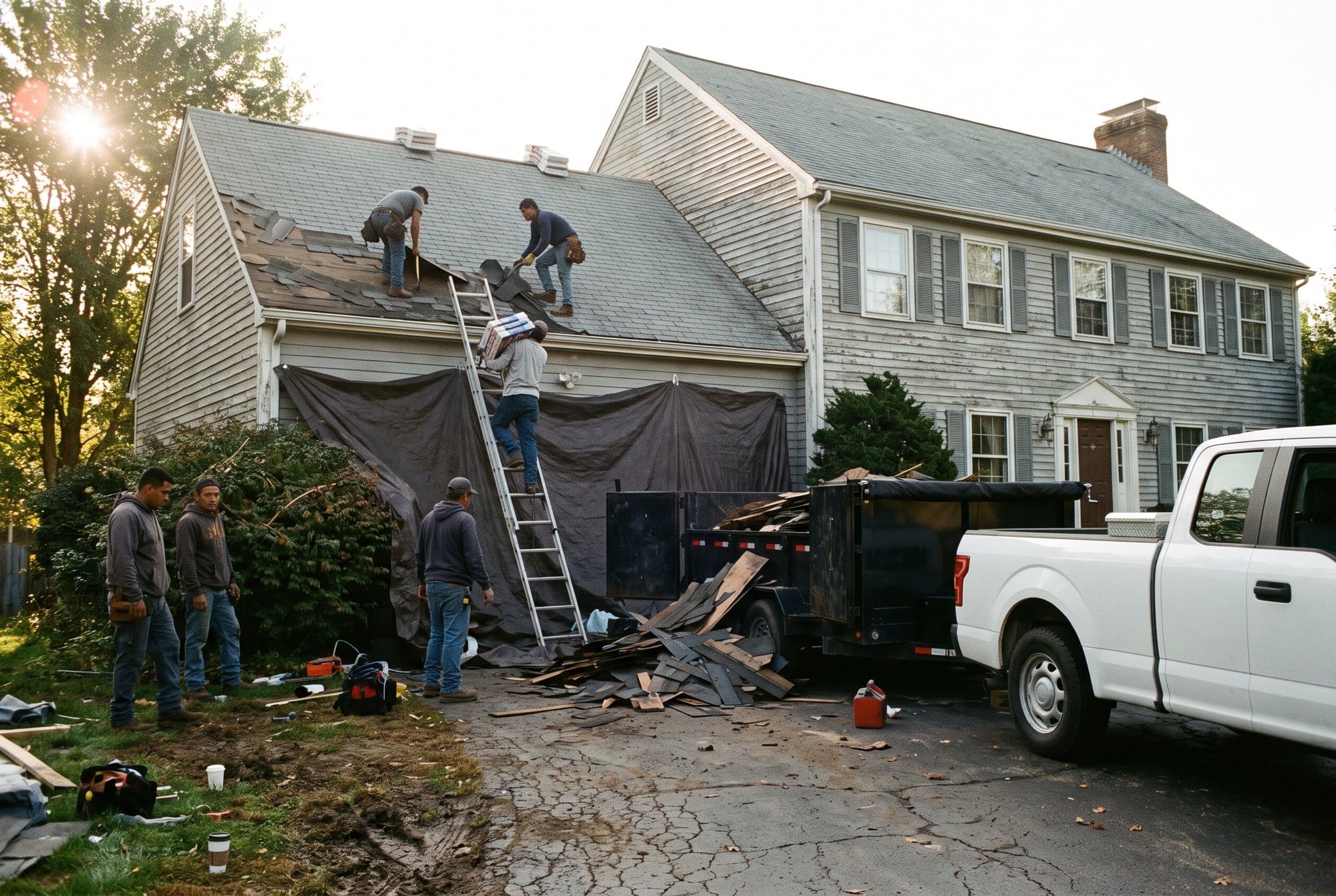
To choose a roofing contractor in New Jersey, verify four things before anything else: a valid NJ Home Improvement Contractor (HIC) license (format 13VH + seven digits, looked up on the state site), proof of general liability and workers’ comp insurance sent straight from their insurer, a written itemized contract that spells out tear-off and materials, and a local track record you can actually check. A contractor who passes all four is worth a real conversation; one who stalls on any of them is telling you something. Everything below is how to run those checks and read the answers.
Check 1 — The license (this is not optional in NJ)
What should homeowners verify before choosing a New Jersey roofer?
A New Jersey roofing proposal should identify the contractor’s current state registration. Paragon’s published NJ HIC number is 13VH13814500. Homeowners should also request the current insurance certificate, read the written scope, confirm responsible trades, and check permit responsibility because registration alone does not establish every project detail.
New Jersey requires anyone doing home improvement work over $500 to register as a Home Improvement Contractor. The number always looks like 13VH13814500 — 13VH followed by seven digits. That is not a certification a company hands itself; it is issued by the NJ Division of Consumer Affairs.
Do this in two minutes: go to the Division of Consumer Affairs site, search the HIC number, and confirm it is active and the registered business name matches what is on the truck, the estimate, and the contract. A common dodge is a real number that belongs to a different company than the one quoting you.
While you are there, remember what an NJ HIC registration is and isn’t. It confirms the business is registered and carries the required insurance — it is not a skill grade. So the license is your floor, not your finish line. Paragon Exteriors is registered as a New Jersey home-improvement contractor (NJ HIC #13VH13814500). Ask for the current insurance certificate and any trade-license attribution required for the proposed scope.
Check 2 — Insurance, in writing, from the insurer
What insurance evidence should a roofing contractor provide?
Workers’ compensation is one coverage the guide says a roofing contractor should document before construction. The certificate should come from the agent or carrier because roofing creates property and worker risks. Its company name, policy dates, and named coverages should align with the contractor and proposed project.
Two coverages matter:
| Coverage | Why it protects you |
|---|---|
| General liability | Pays if the crew damages your home, a neighbor’s property, or a car in the driveway. |
| Workers’ compensation | Pays if a worker is injured on your roof — so the claim doesn’t route to your homeowners policy. |
Ask for a certificate of insurance (COI) emailed to you directly from their agent or carrier. A photo of a certificate proves nothing — dates get doctored and policies lapse. A real contractor forwards this in a day without flinching. A roof is one of the few home projects where people are working two stories up over your family; uninsured labor up there is a risk you carry.
Check 3 — Read the estimate like a spec sheet, not a price tag
What details should an itemized roofing estimate identify?
An itemized roofing estimate should describe the roof assembly, removal scope, and project responsibilities. Ice & water shield is one named component in the guide, along with decking terms, underlayment, flashing, fastening, ventilation, cleanup, permits, and warranty language. Comparable proposals make omissions and material differences easier for a homeowner to see.
The single biggest mistake NJ homeowners make is comparing three quotes on the bottom-line number when the three quotes describe three different roofs. Line them up on the details instead:
- Tear-off vs. layover — Is the old roof coming off to the deck, or are they shingling over it? A layover looks cheaper and hides deck rot. (More on why this matters in our roof replacement cost guide.)
- Deck repair terms — What’s the per-sheet price for replacing rotten plywood, and is a reasonable allowance included?
- Ice & water shield — Required at eaves and valleys for NJ winters. Cheap bids skip it.
- Underlayment — Synthetic across the full deck, or old felt paper?
- Flashing — New flashing at chimneys, walls, and pipes, or reused tired metal?
- Nail count & wind rating — Six-nail, high-wind fastening matters everywhere in NJ and is non-negotiable near the water.
- Ventilation — Ridge venting matched to intake, so the shingles reach their rated lifespan.
- Cleanup & haul-away — Magnetic nail sweep and same-day debris removal, in writing.
If a quote is $3,000 lower than the others, find the line item that explains it before you celebrate. It is almost always one of the rows above.
Check 4 — Local track record beats a shiny pitch
Why does a local roofing track record matter in New Jersey?
A local track record makes project claims easier to verify before a contract is signed. The guide lists a physical NJ address as one useful check, together with nearby work, familiarity with local permit offices, and recent project evidence. These details help distinguish an established regional contractor from a temporary storm-response sales operation.
After a big nor’easter or hail event, out-of-state crews flood the Shore, knock doors, and push homeowners to sign fast. Some are fine; many are gone before the first callback. Favor a contractor who:
- Has a physical NJ address and a real phone number (a person answers, not just a lead form).
- Has done work in your town and knows the local permit office. Township permitting is real here — see our NJ roofing permits guide — and a local crew handles it without you chasing the building department.
- Ask what local references or project documentation are available. Review the contractor’s work and service information for Toms River and Brick.
Jersey Shore roofs also live a harder life — salt air, barrier-island wind, freeze-thaw winters — and a contractor who works here should spec for it by default, not treat coastal fastening as an upsell.
The red-flag list
Which roofing contract red flag deserves special attention?
Insurance-claim paperwork can change a homeowner’s rights as well as the contractor’s payment path. Assignment of Benefits appears on the guide’s red-flag list because the document can transfer control beyond a normal work authorization. Registration, insurance, an itemized scope, payment terms, and a written workmanship warranty provide separate checks before signing.
Any one of these is a reason to slow down. Two or more, walk away.
| Red flag | What it usually means |
|---|---|
| Won’t share the HIC number or COI | Not registered, not insured, or both |
| Demands large cash deposit up front | Cash-flow trouble or a disappearing act |
| Pressure to sign today / “crew’s in the area” | Manufactured urgency to skip your homework |
| Wants you to sign an Assignment of Benefits | Hands your insurance claim to them, not you |
| Quote is a single lump sum, no line items | Nothing to hold them to later |
| No written workmanship warranty | You’re on your own at the first leak |
| No local address or references | Storm-chaser profile |
That Assignment of Benefits point matters especially in NJ: never sign your insurance rights over to a roofer at the kitchen table. Work the claim yourself with a local contractor at your side — our roof insurance claim guide walks through it.
Questions worth asking out loud
What should homeowners ask a roofer before signing?
A workmanship warranty is one subject homeowners should ask about before signing a roofing contract. Other questions should cover crew responsibility, registration, insurance, tear-off, decking, fastening, wind rating, and permit handling. Clear answers should match the written estimate and contract instead of remaining only verbal.
- Who is actually on my roof — your employees or a subcontracted crew?
- What’s your HIC number, and can you email the COI today?
- Is this a full tear-off, and what happens if you find rotten decking?
- What wind rating and nail pattern are you installing?
- What does the workmanship warranty cover, and for how long — separate from the manufacturer’s material warranty?
- Who pulls the township permit?
Good contractors have fast, specific answers. Vague answers to specific questions are their own red flag.
Deposit and payment sanity
What does a reasonable roofing payment schedule look like?
Roofing payments should track real project milestones instead of leaving most funds exposed before work begins. The guide describes a balance on completion after the finished roof has been reviewed, with earlier payments tied to scheduling, materials, or the job start. The contract should state amounts, timing, completion conditions, and cleanup responsibilities clearly.
A modest deposit to schedule and order materials is normal. A demand for most of the money before a shingle is delivered is not. Reasonable structure: a deposit at signing, a payment at material delivery or job start, and the balance on completion after you’ve walked the finished roof. Never pay the full balance before the work is done and cleaned up. Current third-party financing options may be available, subject to lender disclosures, terms, and approval. Paragon is not a lender and does not guarantee approval or a particular payment. Related links: financing information.
The short version
How can homeowners request an itemized Paragon roofing estimate?
Homeowners can request a free estimate from Paragon through the contact path named in this guide. The itemized document can then be compared with another roofing proposal on scope. It should identify materials, removal, project responsibilities, and written terms so the comparison rests on the proposed roof rather than a headline price.
Verify the license. Get insurance in writing. Compare bids on spec, not price. Choose local and check the work. Do those four things and you filter out nearly every bad outcome in NJ roofing before it starts.
Bring us any other bid you have; comparing on spec is the comparison we want. Contact: request a free estimate from Paragon Exteriors.