Local
NJ Roofing Permits: What Homeowners Need to Know Before Work Starts
By Paragon Exteriors LLC · Updated August 18, 2026
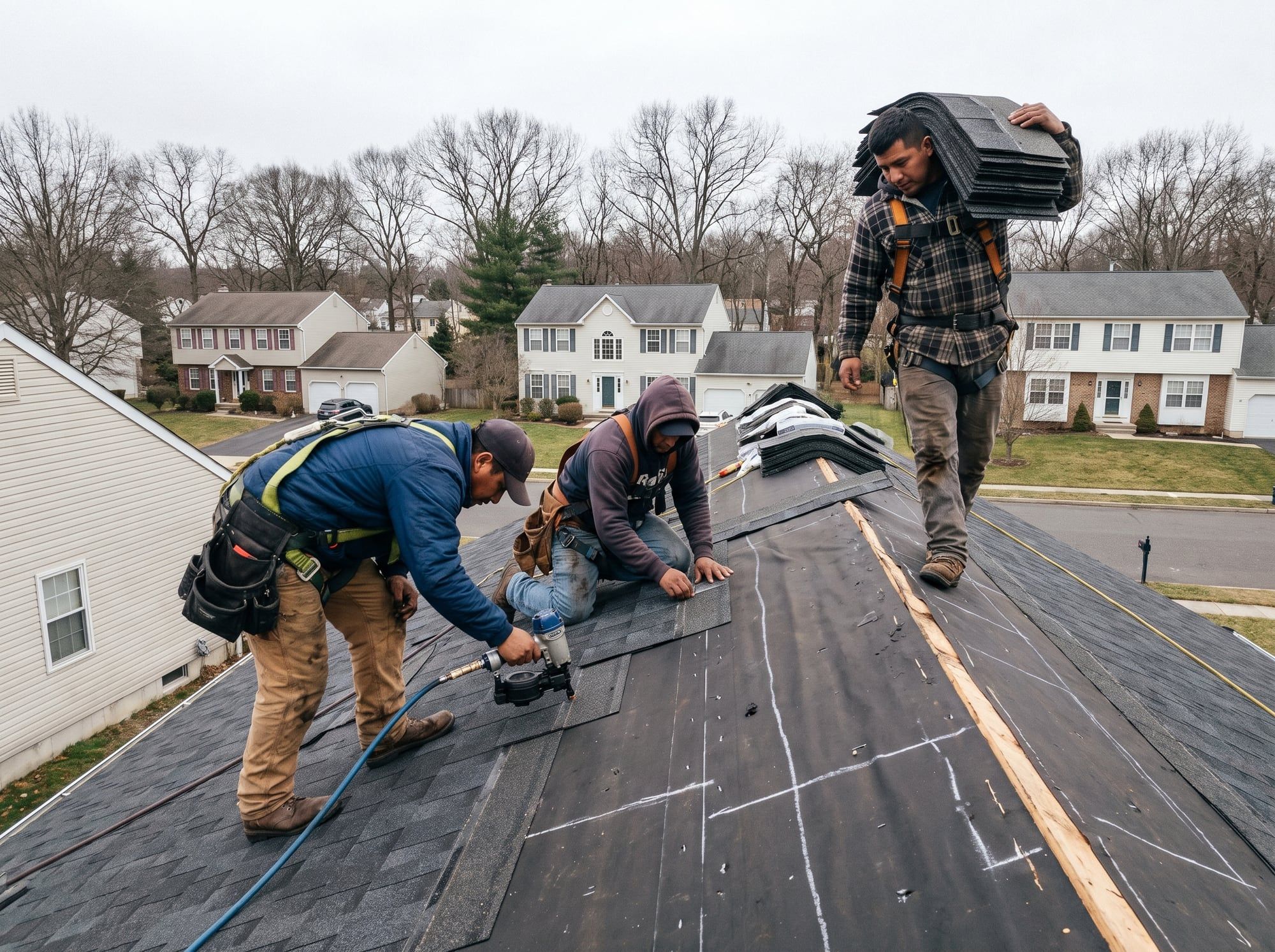
Do you need a permit to replace a roof in New Jersey?
Does an existing New Jersey roof covering always need a permit?
Existing roof-covering work on certain detached New Jersey homes is generally treated as ordinary maintenance. The guide identifies Group R-3 and R-5 dwellings in that rule. Structural work, different materials, property type, local approvals, and related scope can change the answer, so confirm the exact project with the municipal authority before construction.
Usually not for roof-covering work on an existing detached one- or two-family home. New Jersey treats repair or replacement of existing roof covering on Group R-3 and R-5 dwellings as ordinary maintenance. That includes stripping shingles down to the existing sheathing or adding a second roof-covering layer, so those scopes generally do not require a construction permit.
A permit is required when the project replaces roof sheathing, changes structural framing, builds a new roof system, or involves an occupancy with different rules, including townhouses and condominiums. The controlling details are the building type and exact scope—not whether a contractor calls the job a “repair” or “replacement.” Review the NJ Department of Community Affairs roof and siding guidance and confirm the job with the local enforcing agency before work starts.
NJ roof permit vs. no permit
When does roofing work move beyond ordinary maintenance?
Roof-covering work can move into permit territory when the scope changes the supporting assembly or the property follows different occupancy rules. The guide’s table names roof sheathing or structural framing as permit-required work. A contractor’s label does not control the classification; the actual scope and local enforcing agency determine the applicable review.
| Project scope | Typical NJ treatment |
|---|---|
| Repair or replace existing roof covering on a detached one- or two-family dwelling | Ordinary maintenance; generally no permit |
| Strip shingles to existing sheathing without replacing the sheathing | Ordinary maintenance; generally no permit |
| Replace roof sheathing or structural framing | Permit required |
| Townhouse, condominium, commercial, or other occupancy | Different rules; confirm with the local enforcing agency |
The current Uniform Construction Code says ordinary maintenance may be performed without filing a permit application. Because project details can cross categories, Paragon verifies the scope instead of promising “no permit” from a phone description.
Do you need a permit for siding in NJ?
Does every New Jersey siding project avoid a permit?
Standard re-siding may qualify as ordinary maintenance, but material and structural scope can change that treatment. Polypropylene siding is an exception identified in the guide, and some masonry-like wall coverings require review. Concealed sheathing, framing, flashing, or opening changes can also create a separate permit question after the original siding is removed.
Standard re-siding on an existing detached one- or two-family home generally does not require a New Jersey construction permit. Repairing or replacing wood, vinyl, or aluminum siding is ordinary maintenance. Polypropylene siding is an exception, and exterior wall coverings such as stucco, stone, cultured stone, and brick require permit review. Structural repairs, new openings, and other work beyond the siding itself may also trigger permits.
That distinction matters at the Jersey Shore, where a siding estimate may also uncover rotten sheathing, damaged framing, or flashing work. The siding material may be permit-exempt while the newly discovered structural repair is not. A clear contract should separate those scopes and explain who will contact the construction office if the work changes.
How much does a roofing permit cost in NJ?
How is a New Jersey roofing permit fee determined?
In New Jersey, the local municipality sets the fee for a roofing permit under its adopted schedule. Work type and project value commonly affect the amount because there is no single statewide price. A written estimate can show the local charge separately so owners can distinguish the government fee from contractor labor and materials.
There is no single statewide price. If a roof or siding project requires a permit, the local municipality sets the fee under its adopted schedule, usually according to the type and value of work. Ask for the actual local fee rather than relying on a statewide average, and require it to appear as a separate line item in the estimate.
Who pulls the permit?
Who can apply for a New Jersey roofing permit?
Permit applications may come from the property owner or a properly authorized representative. The guide states that an owner or an authorized agent may apply in New Jersey. On contracted work, responsibility for classification, filing, inspections, and record copies should be stated clearly, and no participant should misdescribe a permit-required scope.
New Jersey permits an owner or an authorized agent to apply. On a contracted project, the licensed contractor should determine whether a permit is required, coordinate the correct filing, schedule any required inspection, and give the owner a copy for the property records. Being asked to participate is not automatically a red flag; being asked to misdescribe the work or conceal a permit-required scope is.
Jersey Shore permit checks
Which extra approvals can affect a Jersey Shore exterior project?
Possible Jersey Shore approvals include flood-hazard, historic-district, HOA, or wind-design requirements. These layers can apply beyond the ordinary-maintenance analysis for roof covering or siding. Property type, location, materials, structural scope, and the local enforcing agency establish which reviews apply before materials are ordered or construction begins.
Municipal construction offices administer the statewide code, and coastal properties may also involve flood-hazard, historic-district, HOA, or wind-design requirements. These are separate from the basic ordinary-maintenance question. Before ordering materials, verify the property type, roof or siding material, whether sheathing or framing will change, and whether another approval applies.
This guide summarizes the NJ DCA rules in effect when updated and is not legal advice. The local enforcing agency decides how the code applies to a particular address and scope. Paragon serves Ocean, Monmouth, Middlesex & Burlington Counties and the Jersey Shore, NJ. Request a free itemized estimate or call 848-633-6440. Contact: Request a free itemized estimate.