Windows & Doors
Window Replacement Cost in NJ: 2026 Pricing Guide
By Paragon Exteriors LLC · Updated April 10, 2026
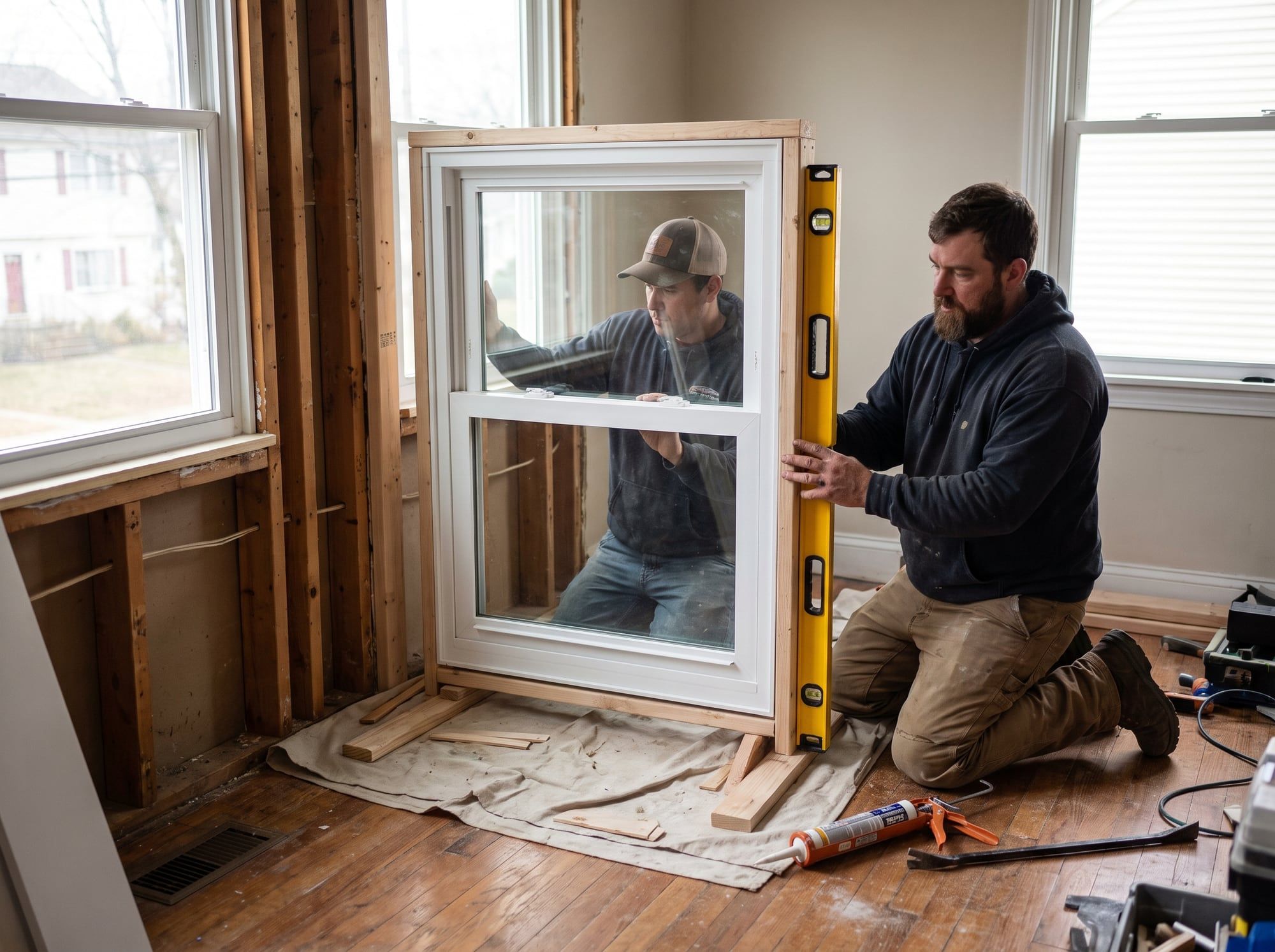
What replacement windows cost in NJ right now
What does an installed replacement window cost in New Jersey?
Installed replacement windows in New Jersey commonly fall within the guide’s $450 to $1,400 per window range. Frame material, unit type, glass, opening condition, insert versus full-frame work, exterior trim, access, permits, and water damage affect the final scope. Proposal comparisons should use the same installation method and written inclusions.
In 2026, most New Jersey homeowners pay $450 to $1,400 per window installed, and a typical 10-window house lands between $6,500 and $14,000. Standard double-hung vinyl inserts sit at the low end; fiberglass frames, large picture or bay units, and full-frame installs on older or coastal homes push the top. Those are real installed numbers — glass, labor, disposal, and flashing included — not the sticker price of the window alone.
Per-window pricing by material and type
How do window material and style affect installed price?
An installed vinyl double-hung insert runs $450 – $850 in this guide, while other materials and styles occupy different ranges. Vinyl casement, fiberglass, composite, fixed, bay, and bow units vary because size and operating hardware change. Frame quality and exposure also matter through New Jersey temperature changes.
Material is the first lever. Here is where the common choices fall in New Jersey, installed:
| Window type | Typical installed price (each) | Best for |
|---|---|---|
| Vinyl double-hung (insert) | $450 – $850 | The NJ default — good value, low maintenance |
| Vinyl casement / awning | $550 – $1,000 | Tight seal, good over kitchen sinks |
| Fiberglass double-hung | $850 – $1,400 | Coastal exposure, tighter tolerances, longevity |
| Composite / clad-wood | $1,000 – $1,800 | Historic looks, premium builds |
| Picture / large fixed | $700 – $1,600 | Big glass, water views |
| Bay or bow (3–4 units) | $2,500 – $5,500 | Living-room feature walls |
Vinyl covers the large majority of Shore-area replacements and holds up fine when it is a quality frame with fusion-welded corners. Fiberglass costs more but expands and contracts less than vinyl in NJ’s freeze-thaw swings, which keeps seals tight over decades — worth it on the ocean side of a home that takes direct sun and salt.
The five things that actually move your price
What factors move a replacement window price?
Full-frame work can add roughly $150–$400 per window when the existing frame has failed. Size, operating style, glass package, coastal rating, access, lead paint, hidden rot, and out-of-square openings also affect price. Insert replacement is less disruptive when the current frame remains sound and suitable.
1. Insert vs. full-frame. An insert (pocket) replacement drops a new window into the existing frame — faster, cheaper, less disruption. A full-frame replacement strips down to the rough opening and is the honest call when the old frame is rotted, out of square, or you have water intrusion. Full-frame adds roughly $150–$400 per window but is the only real fix when the frame itself has failed.
2. Size and style. Price scales with glass area and operating hardware. A big picture window or a casement with a crank costs more than a standard double-hung of the same width.
3. Glass package. Low-E coating and argon fill are standard and worth it in NJ. Triple-pane adds cost and helps most on north and weather-facing walls. Tempered glass is code-required near doors, floors, and wet areas, and it carries a premium.
4. Coastal wind and impact rating. Near the water, the spec matters more than the brand. Look for a design pressure (DP) rating of 50+ and impact-rated glass where the code or your exposure calls for it. On the barrier islands — LBI, Lavallette, Seaside — this is not optional.
5. Access and old-home surprises. Second and third stories, lead paint on pre-1978 homes, hidden rot, and out-of-square 1960s openings all add labor. A good estimator flags these before the crew shows up, not after.
Whole-house budgets by home type
What whole-house window budget fits different home sizes?
The guide places a smaller ranch or cape within a $5,000 – $10,000 whole-house planning range. Larger colonials and coastal homes have more openings and higher listed budgets. When full replacement does not fit at once, the section suggests phasing work by prioritizing weather-facing windows and the worst drafts.
| Home | Windows | Typical 2026 range |
|---|---|---|
| 2-bed ranch / cape (Holiday City, inland) | 8–10 | $5,000 – $10,000 |
| 3-bed colonial | 12–16 | $8,000 – $18,000 |
| Larger or two-story coastal home | 18–25 | $14,000 – $32,000 |
If those numbers are a stretch all at once, phase the project. Replace the wind- and weather-facing windows and your worst drafts first — usually the north and ocean-facing walls — then finish the rest next season.
When replacement pays for itself
When does window replacement make practical sense?
Replacement may be appropriate when there is condensation between the panes, visible frame rot, stubborn sashes, interior ice, or noticeable drafts. The guide emphasizes comfort, noise, and water integrity over energy savings alone. Coordinating windows with siding can also reduce duplicated flashing and labor while the exterior is already open.
New windows are not primarily an energy play in New Jersey — they are a comfort, noise, and water-integrity play. That said, ENERGY STAR–rated units cut drafts and typically trim heating and cooling bills by a meaningful chunk on a leaky old house. The stronger financial argument at the Shore is protection: a failed or underspec’d window lets wind-driven rain into the wall, and rotted sheathing behind siding costs far more than the window ever did. If you are already opening up the exterior, coordinating new siding and windows in one pass saves on flashing and labor.
Consider replacement when you see: condensation between the panes (a failed seal — not fixable), sashes painted or swollen shut, visible frame rot, ice on the interior glass in winter, or drafts you can feel with a hand. Single-pane or early aluminum windows on a 1960s–80s Ocean County home are almost always past due.
How to compare window quotes without getting sold
How should homeowners compare replacement window quotes?
Comparable window quotes match frame material, installation method, glass package, rating, and per-window pricing. The guide tells homeowners to verify NJ home-improvement registration and current insurance documentation. Installer responsibility and flashing details also matter because product quality alone cannot prevent leaks caused by an incomplete or poorly executed installation scope.
The window business runs on high-pressure “today only” pricing. Cut through it:
- Match the spec, not just the number. Frame material, insert vs. full-frame, glass package (Low-E, argon, tempered), and DP rating have to line up before two prices mean anything.
- Get the per-window price. A lump-sum bid hides where the money goes. Itemized lets you phase or trim.
- Ask who installs. A great window installed badly leaks. Confirm it is the contractor’s own crew, and that they flash and seal the opening — not just foam-and-caulk.
- Verify registration and insurance. Confirm the contractor’s current NJ home-improvement registration and ask for a current insurance certificate.
- Ignore the countdown clock. Compare written terms and review current financing disclosures before deciding.
For a related decision on the exterior envelope, our guide on vinyl vs. James Hardie siding walks through the same durability-vs-cost tradeoffs, and the siding cost guide covers coordinating the two.
Local notes: permits and the Shore
Do replacement windows need a permit in New Jersey?
Straight insert replacements in the same opening generally do not need a permit in New Jersey towns, according to the guide. Enlarged openings, full-frame work, and added egress windows can require approval, while bedroom egress and tempered-glass locations are inspected. The section says Paragon handles required paperwork across its local service area.
Most straight insert replacements in the same opening do not need a permit in New Jersey towns. You will need one for enlarging an opening, going full-frame, or adding an egress window — bedroom egress size and tempered-glass locations are enforced at inspection. Paragon serves Ocean, Monmouth, Middlesex & Burlington Counties and the Jersey Shore, NJ. Nearby service areas: Toms River and Brick.
Get an itemized window quote
Ranges are for planning; your house deserves an exact, per-window number. Photo or drone documentation may be included when appropriate for roof access, safety, and project scope. Current third-party financing options may be available, subject to lender disclosures, terms, and approval. Paragon is not a lender and does not guarantee approval or a particular payment. Contact: Request a free estimate.